Rules of Worship and Religious Rites
The Obligatory Prayers and the Regular Sunnah Prayers
Their rak‘ahs and times, the regular Sunnah prayers, and voluntary prayers
The Obligatory Prayers
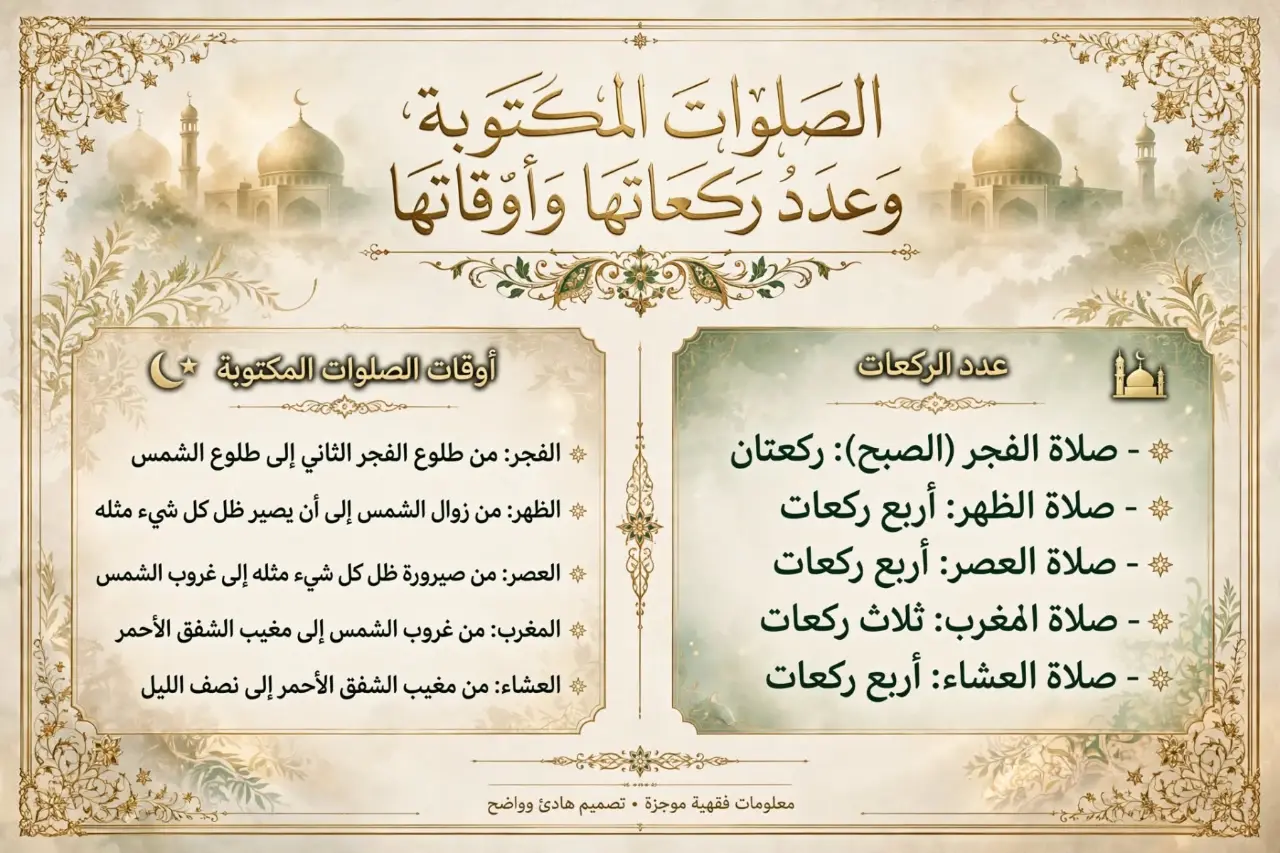
Prescribed Prayers, Number of Rak’ahs, and Times
Fajr (Dawn) Prayer: Two rak’ahs.
Dhuhr (Noon) Prayer: Four rak’ahs.
Asr (Afternoon) Prayer: Four rak’ahs.
Maghrib (Sunset) Prayer: Three rak’ahs.Isha’ Prayer: Four rak’ahs
Times of the Prescribed Prayers:
Fajr: From the appearance of the second dawn until sunrise
.Zuhr: From the time the sun passes its zenith (when it is directly overhead) until the shadow of every object is equal to its own length.
Asr: From when the shadow of every object becomes equal to its length until sunset
.Maghrib: From sunset until the red twilight fades.
Isha: From the fading of the red twilight until midnight
Regular Sunnah Practices
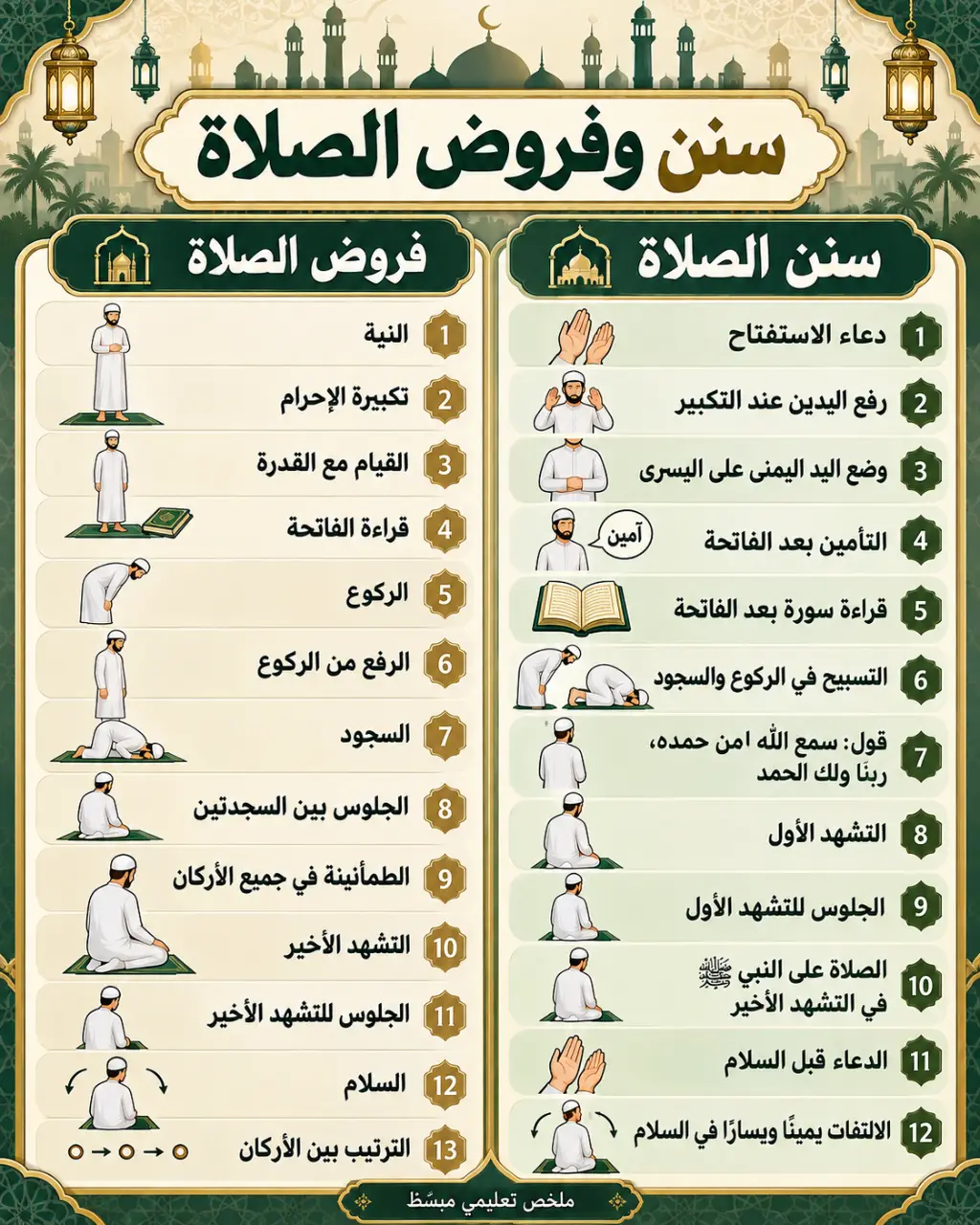
The Sunnah al-Rawatih are the supererogatory prayers that the Prophet ﷺ used to perform regularly before or after the obligatory prayers;
they consist of 12 rak’ahs per day and night,
and are divided as follows
:Breakdown of the Sunnah al-Rawatib
Before Fajr prayer: two rak’ahs
Before Dhuhr prayer: four rak’ahs (with two tasleems) After Dhuhr prayer: two rak’ahs
After Maghrib prayer: two rak’ahs
.After the ‘Isha’ prayer: two rak’ahs.
The Virtues of the Regular Sunnah Prayers
Building a house in Paradise: The Prophet ﷺ said, “Whoever prays twelve rak’ahs in a day and night, a house will be built for him in Paradise.”
.Compensation for Shortcomings: They compensate for any shortcomings or imperfections that may occur in the obligatory prayers on the Day of Resurrection
.Important Notes:
The ‘Asr Prayer: It has no confirmed regular Sunnah, but it is recommended to pray four rak’ahs before it
because the Prophet ﷺ said: “May Allah have mercy on a person who prays four rak’ahs before the ‘Asr.”
While Traveling: It was the practice of the Prophet ﷺ to omit the regular Sunnah prayers while traveling, with the exception of the two rak’ahs of Fajr and the Witr prayer, which he consistently performed whether at home or while traveling.
Supererogatory Prayers
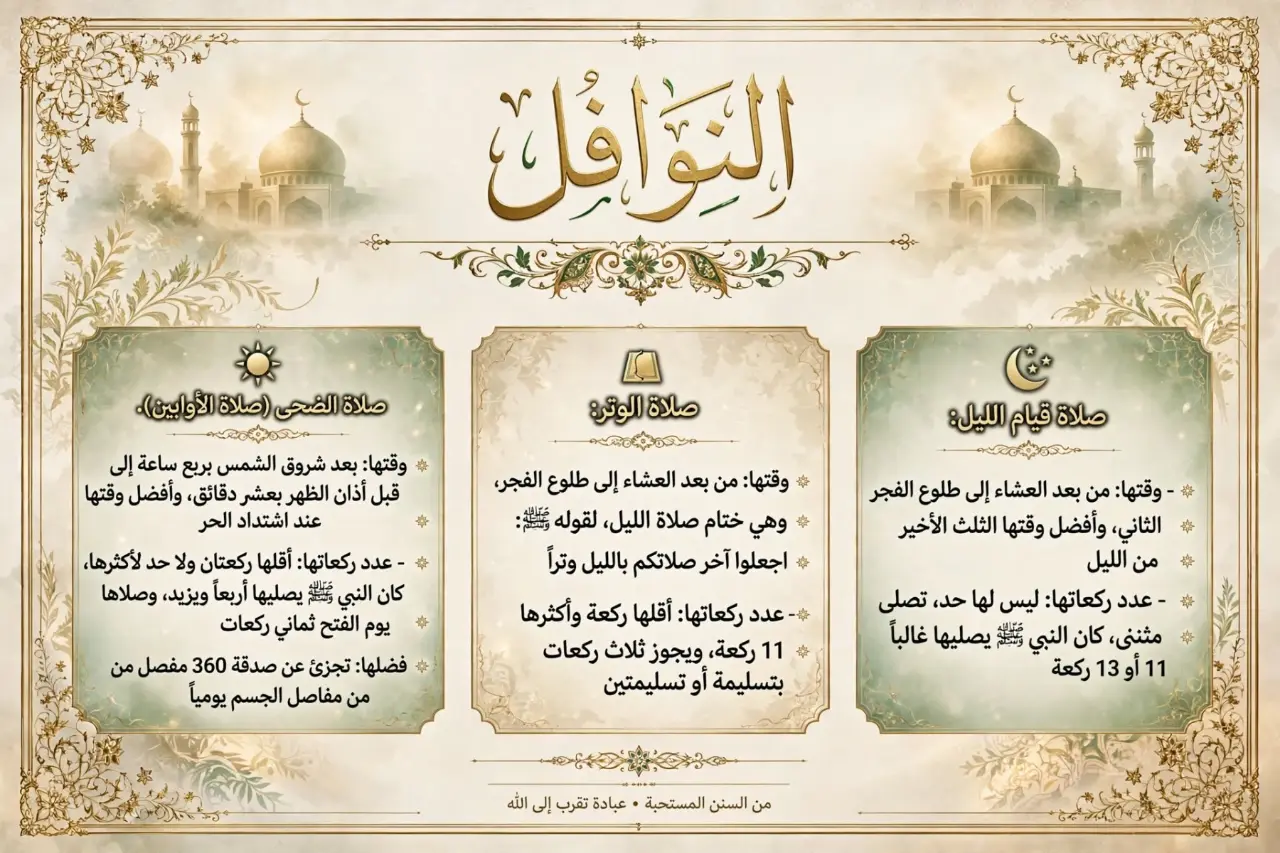
The Witr, Duha, and Night Prayer are among the greatest supererogatory prayers and Sunnah practices that are not confirmed by fixed times
; these prayers carry great merit and have specific rulings:
1. Night Prayer
Time: It begins after the Isha prayer and ends at the break of the second dawn. The best time for it is the last third of the night.
Number of rak’ahs: There is no minimum or maximum number; it is performed in pairs (two rak’ahs at a time). The Prophet ﷺ would usually pray eleven or thirteen rak’ahs.
2. The Witr Prayer
Time: It extends from after the Isha prayer until the break of dawn. It is the concluding prayer of the night, as the Prophet ﷺ said: “Make the last of your night prayers an odd number.”
Number of rak’ahs: The minimum is one rak’ah, and the maximum is eleven rak’ahs. It is permissible to pray it in three rak’ahs (with one or two tasleems)
. 3. The Duha Prayer (Prayer of the Devout)
Time: It begins a quarter of an hour after sunrise (when the sun is at the height of a spear), and ends approximately ten minutes before the Dhuhr call to prayer. The best time for it is when the heat is at its peak (the heat of the day)
. Number of rak’ahs: The minimum is two rak’ahs, and there is no upper limit according to the most correct opinion (the Prophet ﷺ used to pray four rak’ahs and add as many as Allah willed; on the Day of the Conquest, he prayed eight rak’ahs)
. Its virtue: It counts as charity for each of the 360 joints in the human body each day.